Jaylen Brown Trade
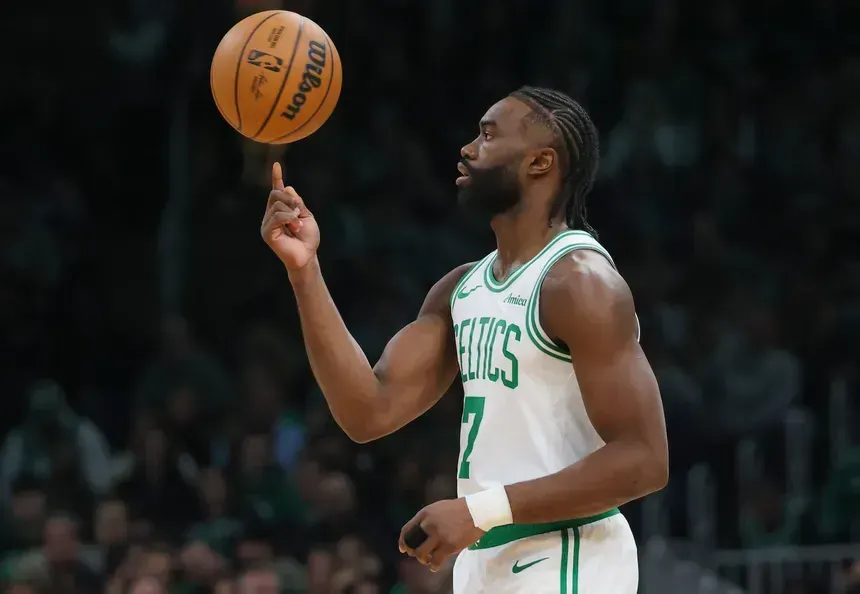
I don't think Jaylen Brown was overrated in a basketball sense. Rather, he became overpaid in this new roster-building environment.
As someone who became a Celtics fan as a seven-year-old kid from Ajax, Ontario, I can remember most of the tail end of the 2000s Celtics, although admittedly it's a little hazy outside of the 2008 playoffs. Since then, I'd like to think I've followed the Celtics religiously. So, in almost 20 years of my fandom, I can only recount three times I've ever cried as a fan.
The first was June 18, 2010, when my dad and sister woke me up in the morning to let me know the Celtics had lost Game 7 of the 2010 NBA Finals the night before. The second was May 3, 2013, the last game my favourite player, Paul Pierce, played as a Celtic. I remember hearing rumblings that he and Kevin Garnett wouldn't be returning in a Celtics uniform, coincidentally after a playoff series against the New York Knicks. Lastly was May 12, 2025, as many know, the night Jayson Tatum ruptured his right Achilles tendon against, who else, but the New York Knicks. Those were the only three times I'd ever cried as a Celtics fan... until the Jaylen Brown trade.
To be fair, when the JB trade first went through, I didn’t feel those emotions right away, like I did during those other moments. But after looking at the photo I have of Jaylen's Game 1 game-tying shot over Pascal Siakam in the 2024 Eastern Conference Finals, and then going back and watching highlights from that 2024 championship run, along with the infamous 2022 run when JB himself tweeted that "the energy shifted" and the team made its first Finals since 2008, I started to look at the situation differently.
I wasn't a fan of the media coverage surrounding Jaylen Brown this offseason. Some of the things that were being said about Jaylen's value were very disrespectful, especially when we talk about advanced analytics. While I'll never be one to shame analytics, as the world we live in runs on them, I do believe there's a fine line between using them to help tell the full story about a player and using them to ignite a narrative.
One thing I want to make clear is, I don't think Jaylen Brown was overrated in a basketball sense. Rather, he became overpaid in this new roster-building environment. I'll never blame, or encourage, a player to take a pay cut because I like to put myself in the figurative shoes of the players. But with the NBA's second apron under the current collective bargaining agreement, which went into effect in the 2024 offseason and carries meaningful penalties, including no mid-level exception access, tighter trade rules, limits on sending cash, and eventual draft-pick penalties for teams that live above it, roster construction has fundamentally changed.
If the Celtics had kept Jaylen and eventually extended him, he would have accounted for roughly 34.6% of the team's 2026-27 salary cap by himself. Pair that with Jayson Tatum's 2026-27 salary, and Boston would have had about 70% of its cap tied up in just two players. For comparison, Brad Stevens mentioned in his post-trade interview that the duo made up around 30% of the cap in 2024.
So, while it hurts to see Jaylen go, I can understand the decision about looking ahead to the future. A lot of people forget that the reason the Celtics ended up with both Jaylen and Jayson was because of the great Danny Ainge trading Paul Pierce and Kevin Garnett to the Brooklyn Nets in the first place. This isn't the first time the Celtics, as an organization, have had to make a painful decision in order to contend both now and in the future.
While only time will tell how this trade plays out, it has already opened the door to a broader conversation about team-building in the NBA. The Celtics may be one of the first high-profile teams forced to break up a homegrown core because of the second apron, but they likely will not be the last. Victor Wembanyama’s recent extension with the Spurs may offer a glimpse of what comes next. Rather than pursue a deal that could have reached roughly $303 million, Wembanyama signed a five-year, $252 million extension, giving San Antonio greater flexibility as it continues building around him ESPN’s Shams Charania. Not every star should be expected to make that sacrifice, but in this new financial environment, players and teams may increasingly have to decide how much maximum earnings, roster flexibility and long-term continuity can coexist.